

DAYLIGHTING IN BUILDINGS
Performance evaluation of
Daylight provision, exposure to sunlight, glare protection, and view out.
HOW TO EVALUATE THE PERFORMANCE OF 'DAYLIGHTING IN BUILDINGS'?
The 17037 European Standard 'Daylighting in Buildings' provides criteria and benchmarks, design guidelines, evaluation and performance assessment methods, and validation methods for use by architects, real estate developers, and building owners. The standard evaluates daylight provision based on four primary criteria:
Daylight Provision
Exposure to Sunlight
Protection from Glare
View Out
Daylighting in buildings can significantly contribute to a building's lighting needs and help reduce energy costs.
Direct sunlight is a key quality criterion for human well-being, and its duration is an essential criterion for interior spaces.
A glare assessment is recommended for workspaces where occupants can't choose their position or viewing direction.
Windows provide much more than just daylight, which can't be ignored or substituted. The 'quality of the view out' can be assessed.
SAVE ON ENERGY COSTS - ALL DAY, EVERY DAY
USE IT ALL DAY, EVERY DAY
GET IT FREE OF CHARGE
SEE THE NATURAL COLORS
SAVE ON LIGHTNING COSTS
Daylight is available for over 4400 hours each year, all day long, every day - even during rainy and cloudy weather.
The primary source of all daylight is the Sun, providing over 8,8 × 10^7 lm/m² annual illuminance free of charge.
Daylight offers the highest color-rendering (CRI > 95%) that no electric light source can fully replicate.
A well-designed daylighting system can reduce energy consumption for electric lighting in a building by up to 75%.
DAYLIGHT PROVISION
Daylight can contribute significantly to the lighting needs of any type of building.
The daylight performance of the interiors significantly affects the building's overall value. Real estate professionals can use this benchmark to compare properties and deliver more accurate return-on-investment forecasts.
Daylight provision metrics help architects and their clients evaluate design alternatives during the design process. The annual energy use for electric lighting can be estimated based on the building's daylight performance.
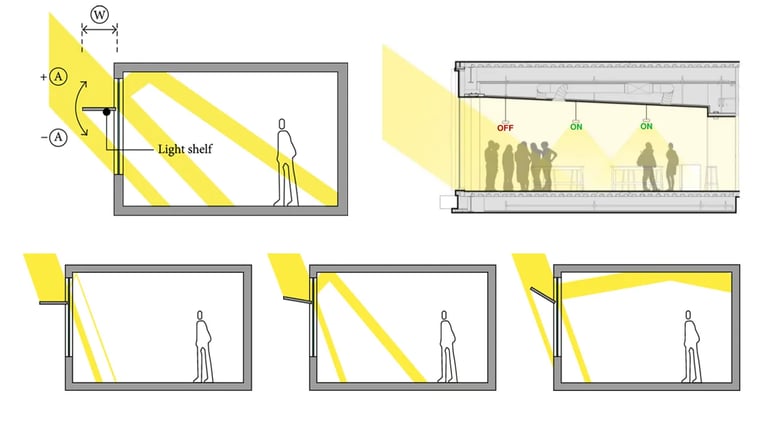
For daylight design, the building's location and surroundings, size, position, glazing, and the orientation of openings, as well as the properties of the interior (including furnishings and wall and ceiling surface reflectance), must be considered.
To meet a specified level (minimum, medium, or high) of the EU standard, a target illuminance level ET (lx) must be achieved across a fraction (F plane, %) of the reference plane for at least half of the daylight hours (F time, %). In addition, a minimum target illuminance level ETM (lx) must be achieved across the reference plane.
Levels of daylight provision by openings in vertical and inclined surfaces according to the EN 17037 EU standard.
LET THE SUNSHINE IN - AND STAY HEALTHY
KEEP YOUR INTERNAL CLOCK IN SYNC
GET THE SUNSHINE VITAMIN
ENJOY THE SUN AND STAY HEALTHY
LET THE SUN IN WHEN IT'S COLD
The direct sunlight is crucial for regulating the circadian rhythm and maintaining a daily sleep-wake cycle.
Vitamin D helps with bone health, blood pressure, and immune strength - but only if your body gets direct sunshine.
Sunshine helps reduce stress, combat depression, treat skin issues, improve sleep, and support a healthier, longer life.
Use passive and active solar heating systems to maximize solar gain and reduce heating costs during the cold season.
EXPOSURE TO SUNLIGHT
Direct sunlight is a key quality criterion for human well-being.
During building design, sunlight access must be considered alongside solar gain evaluations, the use of passive solar systems, and visual comfort requirements as specified by architects.
Design considerations will influence the building's form and functional layout, façade design, size and orientation of daylight openings, and shading system characteristics.
Minimum sunlight exposure should be provided in common areas of kindergartens, retirement homes, and hospital patient rooms, and in at least one habitable room in residential dwellings or houses.
The duration of direct sunlight throughout the year in an existing building's interior can be determined using on-site measurements, photographs, and sun-path diagrams.
The level (minimum, medium, high) of exposure to sunlight is determined by the minimum number of hours a space receives direct sunlight on a clear, cloudless day in the year, typically between February 1st and March 21st.
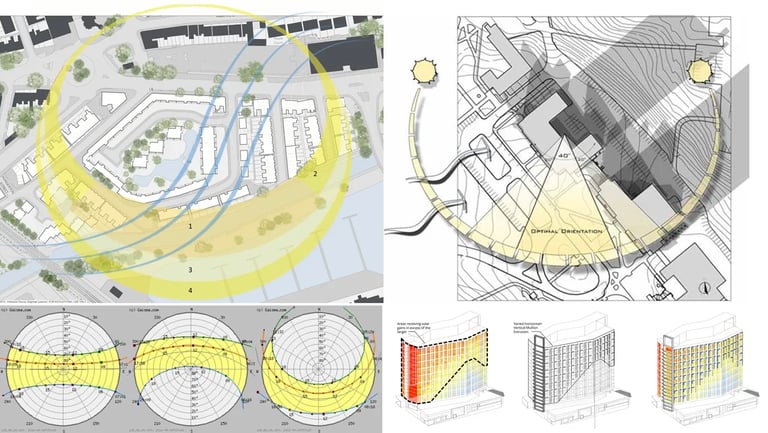
Levels for daily sunlight exposure according to the EN 17037 EU standard.
CREATE PLEASANT WORKPLACES - AT HOME OR IN THE OFFICE
STAY FOCUSED, STAY SHARP
SET UP YOUR WORKSPACE
SHED SOME LIGHT
WORK IN HARMONY
To stay focused on the work, bright sunlight or its reflection (glare) on a monitor, desk, board, or projector screen should be avoided.
Selecting the correct location and workspace position, and adjusting the viewing direction, may help reduce the unpleasant glare-related distractions.
Proper use of shading devices can help to reduce the risk of glare in co-working spaces where occupants can't choose their work position or viewing direction.
Create a pleasant and productive work environment by harmonizing lighting, shading, interior décor, and workplace ergonomics.
PROTECTION FROM GLARE
Glare is a negative sensation causing annoyance, discomfort, or loss of visibility.
Daylight significantly affects visibility, visual comfort, aesthetics, task performance, safety, mood, satisfaction, work productivity, and social interactions. However, direct sunlight or its reflections in the field of view can create glare in workspaces.
Sunlight—particularly in classrooms and workspaces—can cause serious visual discomfort. Once the sources of glare and their duration are identified, the likelihood of glare can be minimized.
A glare assessment is recommended in spaces where activities are comparable to reading, writing, or using display devices, and occupants are unable to choose their position and viewing direction. For glare protection, retractable shading devices with variable translucency are recommended.
The Daylight Glare Probability (DGP) study can be used to assess protection from daylight glare. It considers both the illuminance at eye level and individual glare sources of high luminance to estimate the fraction of dissatisfied persons.
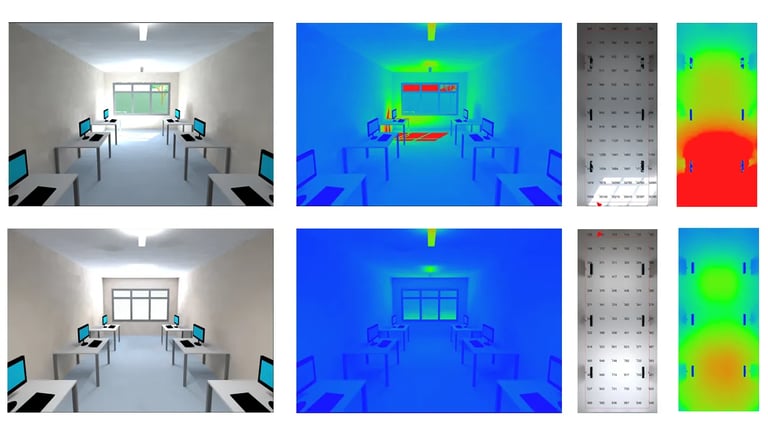
Levels of threshold for glare protection according to the EN 17037 EU standard.
ENJOY THE VIEW - STAY IN PICTURE
BE IN THE PICTURE
RELAX WITH THE VIEW
HOME WITH A VIEW
LOOK OUT, FEEL SAFE
View of the outside - visual connection with the exterior - provides information about the local environment, weather changes, and the time of day.
The outdoor view provides refreshment and relaxation by offering a change of scenery and a shift in focus, helping ease fatigue from long hours indoors.
The quality (diversity, number of visible layers) and the characteristics (distance, view angle) of the view significantly influence property values.
The view of the outside world has its own unique qualities; it provides a sense of security for occupants that CCTV systems can't match.
VIEW OUT
Windows provide much more than just daylight, which can't be substituted or ignored.
The quality of the view from a flat's interior has a significant impact on the property's value. Flats and apartments within the same building may have equal floor areas and layouts, yet the quality of the views offered may differ significantly.
Viewing the outside provides information about the environment, weather changes, and the time of day, which can help alleviate fatigue associated with prolonged periods spent indoors. All occupants of a space should have the opportunity to relax through a change of scene and focus.
The European standard provides benchmarks and various methods to evaluate the quality of views during the design phase of the building, as well as to verify the 'view quality' level of existing interior spaces.
The view out level is assessed from a given position and depends on the horizontal sight angle, the distance of outside view, and the number of visible layers of the exterior environment.
The quality of the view depends on the width of the viewing angle (the size of the window), the distance, the number of distinct, visible layers (sky, landscape, ground), and the quality of the environmental information of the view.
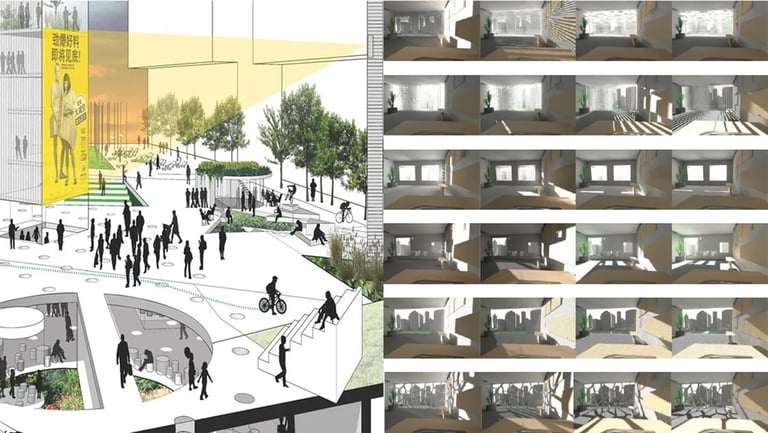
Levels of view out from a given position according to the EN 17037 EU standard.
RESEARCH
Learn more about daylighting, visual comfort, and sustainable building design and guidelines.
GALLERY
Discover the beauty of daylight in buildings from heritage icons to contemporary architecture.
GLOSSARY
Read about the essential terms in plain language to shape interiors to improve comfort and well-being.
Copyright: Unless otherwise stated, all content on this page is © 2026 Filetoth. Access and Use: These publications, presentations, photographs, and articles are available free of charge for personal, educational, and non-commercial online reading. For more information, please visit the Legal and Privacy Notices page. For permissions beyond the scope of this license, please reach out via the Contact form.